A.W. Pink was a Reformed author in the early to mid 1900's. His works are of invaluable worth. I was inspired and instructed in the days of my youth by the unabridged version of his book The Sovereignty of God and recommend it to this day. In his book The Attributes of God, which is itself otherwise very good, he states "The Holy Spirit has to shine in our hearts (not intellects) in order to give us 'the knowledge of the glory of God in the face of Jesus Christ' (2 Cor. 4:6)". And earlier in the same chapter he reiterates this thought by saying "Nor is God known by the intellect". Jesus in contrast to this states in Luke 10:27 that we are to "love the Lord your God with all your heart, with all your soul, with all your strength, and with all your mind " (italics mine). The Lord warns of those who darken counsel by words without knowledge in Job 38:1,2. In Jeremiah we learn that if Israel will repent God will send them shepherds "who will feed them with knowledge and understanding "(Jer. 3:15) but he later proclaims that they are foolish, as silly children, having no understanding (Jer. 4:22). Paul in Romans 10:2 tells us that Israel has a zeal for God but not according to knowledge and he warns us of end times in which people will be always learning and never able to come to the knowledge of the truth in 2 Timothy 3:7. There are those who say "no creed but Christ " but scripture says no creed, no Christ. Salvation demands we both understand and assent to the Gospel (good news) of Jesus Christ. It is just as illegitimate to dichotomise a head faith and a heart faith as it is Christ's being Savior from Christ being Lord. Lack of knowledge leads to false worship.
Sunday, April 22, 2007
Lamentations #4
A.W. Pink was a Reformed author in the early to mid 1900's. His works are of invaluable worth. I was inspired and instructed in the days of my youth by the unabridged version of his book The Sovereignty of God and recommend it to this day. In his book The Attributes of God, which is itself otherwise very good, he states "The Holy Spirit has to shine in our hearts (not intellects) in order to give us 'the knowledge of the glory of God in the face of Jesus Christ' (2 Cor. 4:6)". And earlier in the same chapter he reiterates this thought by saying "Nor is God known by the intellect". Jesus in contrast to this states in Luke 10:27 that we are to "love the Lord your God with all your heart, with all your soul, with all your strength, and with all your mind " (italics mine). The Lord warns of those who darken counsel by words without knowledge in Job 38:1,2. In Jeremiah we learn that if Israel will repent God will send them shepherds "who will feed them with knowledge and understanding "(Jer. 3:15) but he later proclaims that they are foolish, as silly children, having no understanding (Jer. 4:22). Paul in Romans 10:2 tells us that Israel has a zeal for God but not according to knowledge and he warns us of end times in which people will be always learning and never able to come to the knowledge of the truth in 2 Timothy 3:7. There are those who say "no creed but Christ " but scripture says no creed, no Christ. Salvation demands we both understand and assent to the Gospel (good news) of Jesus Christ. It is just as illegitimate to dichotomise a head faith and a heart faith as it is Christ's being Savior from Christ being Lord. Lack of knowledge leads to false worship.Monday, April 16, 2007
The Federal Vision's Blindness

There is a movement today in Reformed circles that is shaking it's very foundations and if left alone, will leaven the whole lump. The movement originated at the Auburn Avenue Presbyterian Church in Monroe, Louisiana during a Pastors conference in 2002. The speakers at this conference were John Barach, Steve Schlissel, Doug Wilson and Steve Wilkins, the pastor of the Auburn Avenue Presbyterian Church(PCA). The movement has since made inroads to other Reformed churches and denominations. Although it has been called by many different names, the most common names for it are The Auburn Avenue Theology and currently the Federal Vision. Along with the "Monroe Four" listed above, current advocates include Peter Leithart, Rich Lusk, Tom Trouwborst, Ralph Smith, Joel Garver, Mark Horne and James Jordan. The vehicles for the movement are the magazine Credenda/Agenda, the publication company Canon Press, multiple books authored by the above listed individuals and their internet websites. The movement even has it's own denomination in the Confederation of Reformed Evangelical Churches (CREC) although the majority of those spearheading it are still in other denominations such as the Presbyterian Church of America and the Orthodox Presbyterian Church. The goals of the movement are simple, to objectify the covenant of grace and save federal theology from the Baptists and dispensationalists.
What The Federal Vision Teaches
Although the adherents of the Federal Vision (FV) do differ amongst themselves on some doctrines, such as paedocommunion(most hold to this but a few like Steve Schlissel do not), each agree with the general thrust and cardinal doctrines issued forth from each other. The first goal of the FV is to objectify the covenant of grace. In order to prevent the "morbid introspection" rampant in so many Reformed circles, the FV propose christians look to the sacraments and their church membership for confirmation of their salvation. John Barach states that "Every baptized person is in covenant with God and is in union, then with Christ and with the triune God...Every baptized person is truly a member of God's covenant"(quoted in The Federal Vision and Covenant Theology by Guy Waters p15). Rich Lusk echoes this by openly affirming "baptismal regeneration" provided the terms be defined properly. For Lusk, defined properly means a "covenantal form of baptismal regeneration".Steve Wilkins also agrees by saying "To be baptized is to be covenantally joined to Christ. Not that baptism justifies, but it inaugurates covenant union with Christ just as circumcision did."and he later states "Baptized children do not have to' join the church' they are members of the church by their baptism.(quoted in The Federal Vision and Covenant Theology p232-234). So for the FV, the covenant of grace is conditioned upon church membership, church membership is conditioned upon baptism and babies are to be baptized. Therefore, when babies grow up, as they are already baptized and members of the church and can look to this as confirmation of their salvation, there must then be no need to acknowledge the gospel of our Lord and Savior Jesus Christ as stated in the book of Acts chapter 16 and verse 31.
While I am no fan either of the "morbid introspection" prevalent in some reformed circles, primarily the ones aligning themselves with Puritan thought, the answer to this is not to deny the gospel by trusting in works or our association in the church, but to get back to the purity and simplicity that is in Christ Jesus( John 11:25-26). Morbid introspection or "fruit policing" stems from the Puritan dichotomy of faith and assurance, as taught in the Westminster Larger Catachism Q. 81,which is a departure from the Reformers who taught assurance is of the essence of faith , and is catachized in The Three Forms of Unity. Taken to the extreme, this view equates faith with the works of faith and always leaves one doubting as to whether they ever truly believed. What is implicit in some Presbyterian churches, however, is explicit in the FV. The FV clearly deny that faith, in Justification, is merely receptive. Rich Lusk in his exposition of James 2 states unequivocally that "persons will not be justified by faith alone, but also by good works they have done" and later "James is speaking of a justification in which faith and works combine together to justify. Future justification is according to one's life pattern. No one dare claim these works to be meritorious, but they are necessary."(Waters p90). Also the FV does not explain how being baptized as a baby and made a member of the church without any prior proclamation of faith in Christ will bring assurance.
This leads to the next topic of discussion in the doctrine of perseverance.As shown above, the FV clearly hold that all babies baptized are members of the church and can be rightfully called Christians. So what happens if some of these babies grow up and reject Christ and leave the church as is clear some do? The inescapable conclusion is that these persons lose their salvation and thus we have a denial in the FV of perserverance. Scripture, however, tells us they were never saved to begin with (1 John 2:19).
Roots of the Federal Vision
Although a new movement the FV has roots that go way back, as is true with all heresies. First and most obviously, is the Catholicism and Eastern Orthodoxy which the FV is on a collision course with. Other protestant high church denominations, however, such as the Lutherans , The Episcopal/Anglicans and the French Huguenots have also been highly ritualistic and held to baptismal regeneration. Christopher Hutchinson, a critic of the FV, states in his chapter of the book The Auburn Avenue Theology Pros and Cons: Debating the Federal Vision, that "First, culturally , I agree with Doug Wilson that this is an odd controversy. He says it is odd because having left the Baptist persuasion for the Reformed realm, he now finds himself among baptists. In my case, it is odd because I was reared a high church Episcopalian, left it for the simplicity of evangelical presbyterianism, and now find an increasing number of presbyterians who look an awful lot like high church Anglicans, crook and all.". Other movements which the FV is fed from are Van Tillian paradoxicalism, Theonomy, Norman Shepherdism and the New Perspective on Paul. This is apparent from Doug Wilson who describes himself as "postmillennial, Calvinistic, presbyterian, Van Tillian, theonomic and reformed" in his book Reformed is Not Enough: Recovering the Objectivity of the Covenant. Also Rich Lusk hails The New Perspective on Paul theologians (e.g. N.T. Wright , James D.G. Dunn and E.P. Sanders) as "blowing modern day Galatianism out of the water" in their call back to a "corporate view of salvation"(Auburn Theology p135).
Finally,although there is a big difference between the FV and most Reformed Presbyterians, I do want to say that the Westminster(or any) teaching of paedobaptism, baptism as a "seal" of the covenant of grace(contrary to Eph. 1:13,14) and the ordinances being a means of grace(contrary to Rom. 10:17) do at best add confusion if not teach error and give the FV and others a basis for their teaching. I call on all Reformed to repudiate these teachings.
Conclusion
The FV has many other problems such as the denial of Christ imputed righteousness to the believer, a rejection that the law demands perfection and Christ's death for everyone including the reprobate which cannot be addressed at this time. E. Calvin Beisner states in the foreword to Waters book that the FV is a "hybrid of three components" the first he says is a modified Amyraldianism, the second is a modified Arminianism and third a Roman infusionism. How truly confused this movement is. For further on this issue see my discussion of Jansenism listed below also most of my information comes from The Federal Vision and Covenant Theology: A Comparative Analysis by Guy Prentiss Waters and The Auburn Avenue Theology Pros and Cons: Debating the Federal Vision edited by E. Calvin Beisner. Other great books include The Current Justification Controversy by O. Palmer Robertson, A Companion to the Current Justification Controversy by John Robbins and Not Reformed at All by John Robbins and Sean Gerety. Although I have yet to read them Covenant,Justification and Pastoral Ministry: Essays by the faculty of Westminster Seminary California edited by R. Scott Clark and Justification by the Orthodox Presbyterian Church also cover this movement. Books by the movement include Reformed is Not Enough by Doug Wilson, Against Christianity (A most telling and true title)by Peter Leithart and The Call of Grace by Norman Shepherd.


Thursday, March 15, 2007
Jansenism

Jansenism is a movement within the Roman Catholic Church that was started by Cornelius Otto Jansen (1585-1638) a Dutch theologian who became the Bishop of Ypres which is located in the Flemish region of Belgium. A strict Augustinian in his doctrine, he was dismayed by his church's abandonment of the doctrines of grace as seen in the Molinism of the Jesuits. In hopes of bringing reform, Jansen had many debates with the Jesuits and was so vociferous in his disagreement with them, that he almost incurred the wrath of the Inquisition. What might have saved him is his equal disdain for the Protestants. He also debated the Dutch Presbyterian Gisbert Voetius. Whereas the Jesuits were leaving Augustine's doctrines of grace the Reformers had left Augustine's view of the Church. For Jansen there was one Baptism, one Church and the Pope was the head of that church. Jansen also disagreed with the Reformers views on Justification and Assurance. Jansen agreed with Augustine that Justification is a process beginning in God's gracious act of conversion, whereby the sinner is gradually made righteous contra the Reformers who taught that Justification is an act of God's grace whereby sinners are declared righteous on the ground of the righteousness of Christ imputed to them and received by the gift of faith alone. Jansen believed the Reformers were presumptuous in believing in a doctrine of assurance. Jansen did hold in common with the Reformers that man's nature is totally depraved by original sin, that God's grace is irresistable and that Christ did not die for all but only those predestined to be saved. Because of this Jansen was grieved that many in his beloved Catholic Church were leaving Augustine. In order to rectify this, he spent the last twenty years of his life writing his magnum opus the three volume Augustinus which he completed a half hour before he died of a plague that had hit Ypres.

Augustinus was published posthumously in 1640. In the first volume Jansen covered the heresy of Pelagianism, the second volume was a study of the limitations of human reason and the third volume was a study of the Grace of Christ the Savior and concludes with a study of the semi-pelagians of his own day in the Molinists. The book gained a following especially in the french region of Port Royal, where Antoine Arnauld (1612-1694) and, the scientist, philosopher and most famous Jansenist, Blaise Pascal (1623-1662) defended its doctrine. Due to the ensuing controversy, Pope Urban VIII condemned it in 1641 on the grounds that it is forbidden to publish on the doctrine of Grace without the permission of the Pope and that it revived the errors of Michael Baius. The Jansenists, however, were undeterred keeping the debate raging until 1651 when Pope Innocent X appointed a commission to study the issue. The study lasted two years in which the Jansenists set forth their Five Propositions abridged by the author 1. Some of God's commandments are impossible for even just men to keep. 2. In the state of fallen nature no one ever resists interior grace. 3. To merit or demerit, in the state of fallen nature we must be free of all external constraint but not interior necessity. 4. Semi-pelagians erred in believing interior grace can be resisted or accepted by man. 5. To say that Christ died or shed His blood for all men is Semi-pelagianism. In the end, Jansenism was declared heretical.This left Port Royal in the predicament of renouncing Jansenism or rejecting a decree of the pope. Some like Arnauld believed that since the 5 Propositions were not in Jansen's book that they could denounce the Propositions and still advocate the book Augustinus. Others like Pascal, who wrote his Provincial Letters in 1656, openly rejected the decree although still aligning themselves with Catholicism. Either way Jansenism would find it's home in Utrech, Netherlands as France and other Catholic countries were no longer a safe haven for them. In the Netherlands they would elect their own Archbishop and eventually unite with the group called "Old Catholics". Besides their Jansenism, the church has also over the years openly denied the decrees of the Immaculate Conception and Papal Infallibility. The current church numbers in the low thousands and is only in the Netherlands.
 in the french region of Port Royal, where Antoine Arnauld (1612-1694) and, the scientist, philosopher and most famous Jansenist, Blaise Pascal (1623-1662) defended its doctrine. Due to the ensuing controversy, Pope Urban VIII condemned it in 1641 on the grounds that it is forbidden to publish on the doctrine of Grace without the permission of the Pope and that it revived the errors of Michael Baius. The Jansenists, however, were undeterred keeping the debate raging until 1651 when Pope Innocent X appointed a commission to study the issue. The study lasted two years in which the Jansenists set forth their Five Propositions abridged by the author 1. Some of God's commandments are impossible for even just men to keep. 2. In the state of fallen nature no one ever resists interior grace. 3. To merit or demerit, in the state of fallen nature we must be free of all external constraint but not interior necessity. 4. Semi-pelagians erred in believing interior grace can be resisted or accepted by man. 5. To say that Christ died or shed His blood for all men is Semi-pelagianism. In the end, Jansenism was declared heretical.This left Port Royal in the predicament of renouncing Jansenism or rejecting a decree of the pope. Some like Arnauld believed that since the 5 Propositions were not in Jansen's book that they could denounce the Propositions and still advocate the book Augustinus. Others like Pascal, who wrote his Provincial Letters in 1656, openly rejected the decree although still aligning themselves with Catholicism. Either way Jansenism would find it's home in Utrech, Netherlands as France and other Catholic countries were no longer a safe haven for them. In the Netherlands they would elect their own Archbishop and eventually unite with the group called "Old Catholics". Besides their Jansenism, the church has also over the years openly denied the decrees of the Immaculate Conception and Papal Infallibility. The current church numbers in the low thousands and is only in the Netherlands.
Jansenism in Reformed Theology ?
Although John Calvin, John Knox and the other Reformers clearly departed from Augustine on his doctrine of the church and his progressive Justification as the debates between Jansen and Voetius prove, some professed Reformed theologians of today seem to be on the road back to Rome and are more akin to Jansen than they are to Calvin.In the late 70's a controversy raged at Westminster Theological Seminary in Philadelphia, Pennsylvania a Presbyterian and Calvinist institution. The source of the controversy was a professor named Norman Shepherd. Norman was teaching that good works as well as faith were instruments in our Justification. Norman was removed in 1981 after nearly twenty years of teaching this heresy. The fallout has been very costly as students of his have got into the ministry and are now leading churches in this same direction. A current movement called The Federal Vision is clearly linked to Norman as it is led by many of these former students and he is quoted enthusiastically by most of the others. In at least one case a disciple of Norman's has converted to Catholicism. Scott Hahn, a former Presbyterian pastor and graduate of Gordon-Conwell Seminary, wrote his book Rome Sweet Home in 1993 which tells of his conversion to Catholicism. On page 31 of this book he identifies his inspiration as Norman Shepherd. Hahn also brags of a counselling session he had with the late Calvinist stalwart John Gerstner in which he soundly defeated Gerstner's best defense. This, however, is not surprising considering Gerstner's definition of faith in his book Wrongly Dividing the Word of Truth in which he states on page 260 that "Nothing is added to the faith, but this (works) is a part of the definition of the faith" and later in case we did not understand him clearly enough on page 299 that " Lordship teaching does not 'add works' as if faith were not sufficient. The 'works' are part of the definition of faith." With such a radical redefinition of faith it appears that John Gerstner was not the Calvinist stalwart many think he was after all.
Another major event happened in 1994 exemplifying at least an implicit influence of Jansenism. The event was called Evangelicals and Catholics Together: The Christian Mission in the Third Millenium (ECT). This document was constructed by both Catholic and Calvinist theologians in which they declared each other brothers in Christ and declared an intent to witness together. How can they do this unless they share the same Gospel? "Can two walk together, unless they are agreed?" (Amos 3:3) The so-called Calvinists that authored this document are Charles Colson, Os Guinness, Richard Mouw, Mark Noll and J.I. Packer. A few years later after being confronted with their error these same so-called Calvinists along with Timothy George and John Woodbridge initiated ECT 2 in which noted Reformed Baptist scholar Roger Nicole indicated his agreement with and willingness to sign it.
Conclusion
One Catholic author I read stated it is a contradiction for Jansenists to claim Catholicism and reject the Pope. I agree wholeheartedly with the author, but in the Jansenists defense it is also a contradiction for the Pope and the Catholic church to canonize Augustine, and excommunicate Cornelius Jansen and his followers, who taught the same thing. I have no sympathies for either, however, as Calvinism and Jansenism represent two different movements and Gospels. My purpose in writing this is to reveal this movement, as it is not very well known, and distinguish it from the true Reformed faith for which it is being confused in some circles. I want to say at this point that I don't know if Norman Shepherd has ever read Jansen or any of his followers. I am not aware of him quoting any of them. Shepherd is in my opinion, however, closer in his theology to Jansen than the Calvinism he claims. With one of his disciples already in the Catholic church one can only wonder when his other ones in The Federal Vision will say with Jansen, " The Roman Pontiff is the supreme judge of all religious controversies, when he defines a thing and imposes it on the whole church, under penalty of anathema, his decision is just, true and infallible." ( epilogue, Augustinus)
For further reading on these important issues see What is Saving Faith? by Gordon Clark, Faith Alone by R.C. Sproul, Grace Unknown by R.C. Sproul, Putting Amazing Back into Grace by Michael Horton, Christ the Lord by Michael Horton, The Current Justification Controversy by O. Palmer Robertson, A Companion to The Current Justification Controversy by John Robbins, The Federal Vision and Covenant Theology by Guy Prentiss Waters and Counted Righteous in Christ by John Piper.
Soli Deo Gloria
Sola Fide
Friday, January 26, 2007
The Holy Bible
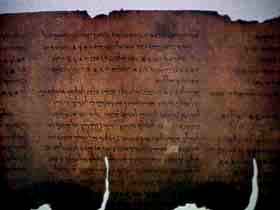
In the beginning God created man in their image and according to the likeness of the Trinity( Gen. 1:26-28), giving him rational thought and the ability to communicate. At this time, Adam and Eve had direct communication with God even walking in the garden of Eden with Him ( Gen. 3:8,9). Due to the fall of man through disobedience this relationship was divorced. Man because of sin died spiritually that day and began the process of physical death. Man being separated from his creator began to experience turmoil, frustration and distress. God, however, in his grace and mercy promised a savior. God knew as the generations passed Man would forget what God had told him and so God set forth a way to communicate his instructions and reveal His Son the promised Saviour to him. Beginning with Moses, God would start what would become, what we call today, the Holy Bible.
Although the 66 books of the Bible were written by over 40 different people, every writer was inspired by God in their authorship (2 Tim. 3:16). This inspiration was not the inspiration of William Shakespeare to write his stories, however, but a moving of the exhaling of God as we learn in 2 Peter 1:20,21 "...that no prophecy of Scripture is of any private interpretation, for prophecy never came by the will of man, but holy men of God spoke as they were moved by the Holy Spirit." This inspiration is seen in the fact that these multiple authors writing over a span of over 1500 years coming from different stations in life as some were kings and some fishermen and others in-between all had a unanimity of purpose and design with historical and scientific accurateness. The Bible sets the standard for any work claiming to be from God, as it does, in the book of Deuteronomy chapter 18 in verse 22 where it says "when a prophet speaks in the name of the Lord, if the thing does not happen or come to pass, that is the thing which the Lord has not spoken; the prophet has spoken it presumptuously; you shall not be afraid of him." In the Bible we read in the book of Isaiah chapter 44 starting in verse 28 that a man named Cyrus would rebuild the temple of Jerusalem. At the time of the writing the temple was still standing and Cyrus had not been born. It wasn't until approximately 100 years later that King Nebuchadnezzar would destroy the temple and then another 60 years that a Persian king named Cyrus would rebuild the temple in Jerusalem. Another example of scriptures accuracy in prophecy is 700 years before Jesus was born Isaiah wrote " therefore the Lord Himself will give you a sign: Behold, the virgin shall conceive and bear a Son, and shall call his name Immanuel."(Isa. 7:14) and in Luke 1:35 we learn that an angel tells Mary that she will give birth to the Son of God even though she is a virgin. These are just a small sampling of the many fulfilled prophecies which set the Bible apart from other books, even books claimed to be God's word as the Koran and the Book of Mormon are.The accurateness, detail, purpose, consistency and origin also set the Bible apart from the false prophesies of men like Nostradamus and Edgar Cayce and the false books known as the apocrypha and pseudepigrapha.

The Inerrancy of Scripture
The writers of scripture, having been inspired by God, were inerrant in that writing. The scrolls penned by their hand in writing Scripture were infallible and authoritative to the church. This, however, does not mean the humans themselves were perfect or that everything they wrote was binding. In Galatians 2:11 we learn the apostle Peter had to be corrected by the apostle Paul for discrimination of the gentiles and 1 Corinthians 5:9 tells us of a letter written by Paul that was not Biblical. In writing the Bible, however, they were writing from God. Paul says in 1 Corinthians 14:37 "... that the things which I write to you are the commandments of the Lord." and in Colossians 4:16 he commands his letter be sent to the other churches to be read by them as well( the Epistle in Laodicea coming to the Colossians was originally sent to the Ephesian church and was later given the name Ephesians). Peter wrote in 2 Peter 3:15,16 " and consider that the longsuffering of our Lord is salvation- as also our beloved brother Paul, according to the wisdom given to him, has written to you, as also in all his epistles, speaking in them of these things, in which are some things hard to understand, which untaught and unstable people twist to their own destruction, as they do also the rest of the Scriptures." in which he clearly compares Paul's writings and his own to the other Scriptures. In the writing of Scripture, God used the authors personalities and unctions in most cases as in Luke 1:3 we read "it seemed good to me also, having had perfect understanding of all things from the very first, to write to you an orderly account, most excellent Theophilus" but obviously in some cases God directly dictated to the author as in the case of Moses in writing the creation account in Genesis. Although the doctrine of inspiration and inerrancy only applies to the authors that actually penned the Scriptures in the original autographs, God has preserved his word through accurate and reliable copies throughout history . We read in Proverbs 25:1 that the proverbs of Solomon were copied by the men of Hezekiah, in Joshua 8:32 Joshua wrote a copy of the law of Moses, Jesus undoubtedly read from copies in Luke 4:16-21 and the parchments Paul called for in 2 Timothy 4:13 were most likely copies. Even today we have over 4700 copies of the Greek New Testament manuscripts. In some cases, as in 1 Samuel 13:1 the numbers have been lost over the years, but in none of the cases have any doctrines been lost.
The Authority of Scripture
The fact that the Bible is God's Word gives it authority. God as our creator and sustainer has a right to rule over us.The Bible is full of prescriptions of a religious, moral and ethical and professional nature. The Bible teaches us how to be proper husbands and wives (Eph.5:22-31), proper parents and children (Eph. 6:1-4), proper employees and employers (Eph. 6:5-9), proper neighbors (Matt. 22:39), proper citizens and rulers (Rom. 13:1-7) and most importantly, proper worshippers of the one true God (Matt. 22:37). The Bible forbids murder (Ex. 20:13),adultery (Ex. 20:14), stealing (Ex. 20:15), lying (Ex. 20:16), covetousness (Ex. 20:17), pride (Prov. 16:18), greed (1 Tim. 6:10), hate (Matt. 5:43), lust (Rom. 1:24), homosexuality (Rom. 1:26), false worship (Rom.1:25) and a host of other vices. Jesus, being God in the flesh the promised Saviour and Messiah, spoke with authority (Matt. 7:29). The Apostles also were given authority in the writing of scripture (2 Cor. 10:8).They were given the ability to perform miracles to authenticate their message and to reveal who they were (Matt. 10:1-4, Act 2). Apostles were ones who had seen the resurrected Christ (Acts 1:21,22) and were called by him to be an Apostle (Acts 9:1-16). To deny the Bible is to deny God's rule, His Son and to forfeit salvation and heaven.

Sola Scriptura
The Formal principal of the Reformation, this Latin term means Scripture Alone. Martin Luther came to see that the edicts of the Pope and the practices of the Catholic church, with its addition of the Apocrypha, were not in accord with the Scriptures and so he started the reformation. Martin held fast to Jesus rebuke of human tradition over God's word as taught in Mark 7:5-17. The true church of Christ believes that the man of God is "equipped for every good work" by the scriptures alone (2 Tim.3:16,17) and that in walking in them we "lack nothing" (1 Thess. 4:12). The Bible has been completed. We have no apostles alive today as Paul was the last called Apostle (1 Cor. 15:8) and the Apostle John wrote the last book of the Bible in Revelation. We believe in the Bible to the exclusion of any Pope, Guru, Swami or cult leader. Although churches have pastors and elders to keep order and preach the truth (1 Tim. 3), they are to be checked ,as the Apostles were, by the Bible (Acts 17:10,11). We use Statements of Faith, Creeds and Catechisms to explain and summarize what we believe but this again is only secondary to the Holy Bible.Churches with so-called apostles in them today and ones that use books not of divine origin like the apocrypha and the Book of Mormon are false churches and deceiving people. Revelation is the last book of the Bible and we are not to add or take away from that book (Rev. 22:18,19).
3 Extremes to be Refuted
As with almost everything certain extremes have crept into the precious doctrine of Scripture Alone. The first is the idea that Scripture is the only truth we can know. Gary Crampton in his otherwise excellent book By Scripture Alone: the Sufficiency of Scripture states that "The Bible is sufficient for all the truth we need and all the knowledge we can have" (p89, italics mine). Earlier on the same page he stated that neither science,history or philosophy were needed to give knowledge.I would hope that the Doctor preparing to give surgery had read other books as well as the Bible. I am sure that the Geometry professor is using a book other than the Bible as a textbook and this is not wrong. Tying our shoes and a host of other things we can know are not in the Bible. This extreme should be avoided.
The second extreme builds on the first and is advocated by Kenneth Good in his book Are Baptists Reformed ?.This book is, as the other, a good read and has a good section on Baptist ecclesiology with which I agree. Kenneth, however, takes the position that the doctrine of necessary consequence is a violation of Scripture Alone.Necessary consequence says that Scripture has implicit teachings as well as explicit ones. To Kenneth this is Rationalism. What Kenneth fails to see is his own view is actually Irrationalism. The Bible teaches just as surely by implication as by explicit teaching. For instance, nowhere is Genesis does it say God created in a 24 hour day but we know he did because he says throughout the creation process the "morning and evening" were one day (Gen. 1).This extreme should be avoided.
The third extreme changes the doctrine of Scripture Alone to The King James Version Alone. This extreme says in essence that the King James translators were inspired by God as the Apostles were. This is clearly error as we saw earlier from scripture that Paul was the last called Apostle and only the Apostles were inerrant in their writing of scripture. This view also says only those who can speak english can read the Bible.Two good books discussing this aberrant view are The King James Only Controversy by James White and The King James Version Debate by D.A. Carson. This extreme should be avoided.
Nature and Scripture
While it is true that both nature and Scripture reveal truth, we must take into account which truths in distinction from one another they reveal. The Bible is clear in Psalm 19 that "The heavens declare the glory of God and the firmament shows his handiwork".The word declare in Hebrew is Saphar and means to make known. Romans 1:20 also teaches that God is seen by the existence of creation. God uses his control over nature as proof of his authority over man in Job 38-42. Jesus expected some knowledge of nature as he says in Matthew 6:26 to look at the birds and in verse 28 to consider the lilies. He also assumed his disciples knew what salt was and what it was for in Matthew 5:13. Scripture alone ,however, reveals the good news of Jesus Christ as the virgin born Son of God, died in the place of sinners and was buried and three days later rose from the grave (1 Cor. 15:1-11).No mathematical formulation will reveal this. No archaelogical find will tell this truth.No microscope or telescope reveals this.Faith comes by hearing the word of God (Rom. 10:17). So whereas nature is not a 67th book of the Bible as claimed in the book Creation and Time by Hugh Ross neither is nature to be refused its proper place.
Scripture is comprehensive and sufficient but not exhaustive. The glory and grandeur of God exceeds the binding of even the largest Bible.As we read in John 21:25 "And there are also many other things that Jesus did, which if they were written one by one, I suppose that even the world itself could not contain the books that would be written. Amen". Amen
Soli Deo Gloria
Wednesday, January 17, 2007
Lamentations #3
 Benjamin Warfield is one of the greatest theologians born in America. His defense of the faith was renowned in a day when Neoorthodoxy and liberalism were running rampant. His defense of the inerrancy of scripture, protection of the church from false signs and wonders and rebuke of the perfectionists still need to be heeded this day. His defense of the practice of infant baptism, however, shows us even the most rational of men can fall prey to irrationalism and traditionalism. Benjamin, when defending infant baptism from an attack by the Baptist theologian Augustus Strong as to why paedobaptists have no consistency with one another on the practice, said in his Polemics p. 406 as quoted in the book Infant Baptism and the Covenant of Grace by Paul Jewett, " Let us confess that we do not all argue alike or aright, but is this not the proof rather of the firm establishment in our hearts of the practice? We all practice alike and it is the propriety of our practice, not the propriety of our defense of it, that is, after all, at stake."
Benjamin should have known that true Christianity bases its practice on scripture and not on tradition or "our hearts". Matthew 28:19 says to make disciples first and then baptise them, Mark 16:16 again qualifies baptism for believers, Acts 2:38 commands to repent and then be baptized and verse 41 goes on to show only "those who had received his word were baptized". 1 Peter 3:15 says to "always be ready to make a defense to everyone who asks you to give an account for the hope that is in you...". If paedobaptism is a Christian practice it should be scriptural and there should be a consensus on why it is performed.
Monday, December 11, 2006
The Scottish Legacy Part 3
Edward Irving (1792-1834)- Theologian and Leader in the "Catholic Apostolic Church" 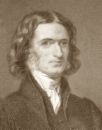 movement a Precursor to the Pentecostal/Charismatic movements. Ordained in the Church of Scotland, he became the assistant to Thomas Chalmers at St. John's in Glasgow. Even at this time he had a rather flamboyant style which did not appeal to the Scots and so he accepted a call to the Caledonian Chapel, a Scottish congregation in London. It was here that his ministry took off as the congregation of fifty soon jumped to a thousand. Edward held to a premillennial understanding of the book of Revelation and preached it fervently. The postmillennialist author and Banner of Truth founder, Iian Murray credits Edward with making premillennialism the dominant eschatalogical view of that time in his book The Puritan Hope. Edward soon came into controversy with his Presbytery, however, with statements he published of Christ's humanity. It seems that Edward held that although Christ is God, he took on "sinful flesh" just like every other man and was only able to overcome through the power of the Holy Spirit. Edward soon came to teach that we to could overcome sin through the power of the Holy Spirit. Edward at this point also came to accept glossolalia(speaking in tongues), prophecies and miraculous healing, believing these to be signs of the baptism of the Holy Spirit. Edward himself never exhibited any of these gifts but he welcomed their manifestation. When the General Assembly heard of this they locked up the building to Edward and the congregation worshipping there. After renting a location, his church formed as a congregation in the Catholic Apostolic Church. Edward would not lead the new group long as he came down with consumption and died even with the "healers" in his church. The movement is, however, still attributed to him as the followers of the movement are called "Irvingites". The movement eventually died down but similar movements in the Pentecostal/Charismatic movements still exist although there is no direct evidence of a link to the Irvingites. On a side note, it is often assumed that the pretribulational rapture doctrine was initiated by Margaret MacDonald , a prophetess in Edward's church, through a vision she had. There is however no evidence to connect a link from Margaret, whose vision is purported to have been in 1830, to John Nelson Darby who had written on this doctrine as early as 1827. This is usually perpetuated by vehemently anti-dispensationalists. Those who disagree with this view should earnestly endeavour to deal with it honestly and not bear false witness. For a good antidote to the charismatic teachings of Irving's church read Charismatic Chaos and Reckless Faith by John MacArthur and Satisfied by the Promise of the Spirit by Thomas Edgar.
William Cunningham(1805-61)- Historian and Free Church Theologian, William succeeded Thomas Chalmers at the New College of Edinburgh as Principal. His magnum opus,the two volume Historical Theology , is essentially a systematic theology as in it he focuses on the debates throughout church history, presenting various sides and then presenting his view. It is because of this work that some consider William to be Scotland's greatest theologian. His theology is faithful to Westminster even to the point of criticising the Reformers themselves. Although he did not feel the difference between Westminster and the Reformers was as extreme as William Hamilton believed, William did think the Reformers statements on assurance were often "rash and exaggerated" and that their view was "erroneous". He was especially mystified by Calvin's definition of faith: "We shall have a complete definition of faith, if we say that it is a steady and certain knowledge of the divine benevolence towards us, which, being founded on the truth of the gratuitous promise in Christ, is both revealed to our minds and confirmed to our hearts by the Holy Spirit" and that it was generally though not universally received for the greater part of the century by protestant and reformed divines. Westminster on the other hand held a clear dichotomy between faith and assurance. William also disdained Calvin's view of the Lord's Supper saying that it was "altogether unsuccessful... as unintelligible as Luther's consubstantiation. This is, perhaps, the greatest blot in the history of Calvin's labours as a public instructor." William held to and defended Zwingli's view of the supper from those who said he held to a "naked and bare sign". William did, however, defend Calvin from the Amyraldists, stating that it is unfair to hold Calvin up on a position never put to him. William felt Calvin would have held to a definite atonement although some of his statements were ambiguous. Finally, William defended his predecessor Thomas Chalmers and Jonathan Edwards although disagreeing with both of them on their determinist views. Some were saying that their views were antithetical to the Westminster Confession with its chapter on "Free Will". William believed that the confession allowed for their view despite his belief that there is a difference between predestination and determinism. Another popular work by William is his The Reformers and the Theology of the Reformation.
John Murray(189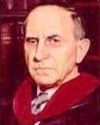 8-1975)- Theologian who taught Systematic Theology at Westminster Seminary in Philadelphia for 36 years. Although a systematic theology professor, John, following in the footsteps of his mentor Geerhardus Vos, preferred the discipline of Biblical Theology and incorporated this into the classes he taught. The discipline of systematic theology takes scripture as a whole recognizing that there are "hard sayings" (2Peter 3:16) in scripture that need to be interpreted in light of other less hard sayings. Biblical theology takes every verse, every word, at face value and pieces them together for a system. Systematic theology looks at the forest; biblical theology looks at the trees. Problems for systematic theology are systems built on presuppositions without Biblical precedence and inappropriate inferences from scripture which are unfounded. Biblical theologians however sometimes hold two contradicting doctrines in their system and live with the tension calling it a mystery because they believe both to be taught in scripture. Examples of this would be holding to predestination and freewill or salvation by grace alone but also baptismal regeneration. John's emphasis on biblical theology led him to deny a covenant of works which caused much debate and tension among his contemporaries. To John, a covenant of works was a contradiction in terms. John held that Adam, even in the Garden of Eden, would have needed God's grace not to fall. Despite this denial John did hold to the doctrines of original sin and the imputed righteousness of Christ but he did so at the cost of consistency according to his colleagues. So according to John there is just a covenant of grace contra Thomas Boston who held to a covenant of works and grace and John Cameron who held to a covenant of works, grace and redemption. John's most famous works include his 2 volume Commentary on Romans, Redemption-Accomplished and Applied and his book Divorce in which he defends the Westminster, Reformed and most importantly scriptural view that divorce is allowed only in the case of adultery or desertion and that re-marriage is allowed. For more on the "Covenant" debate see Covenant Theology in Reformed Perspective by Mark Karlberg or the works of Meredith Kline.
This completes my look at Scotland's legacy. This small sampling is not exhaustive by any means but these men for the most part represent movements, denominations, or doctrines which for good or bad have impacted the world. I realize no man is an island and these men all had help, but the Lord raised these men up in a special way. I have tried to be fair and objective in my presentation of these men's views, despite in some instances, my disdain for their theology. I want this to be the ground work for more extensive studies, later, as I refer to these individuals. I hope this look at Scotland's legacy has been informative and enlightening.
Soli Deo Gloria
Thursday, November 09, 2006
The Scottish Legacy Part 2

Thomas Boston(1676-1732)- Theologian and leader of the Marrow Men who were involved in the Marrow controversy resulting in Secession from the Church of Scotland. Upon his reading the book, The Marrow of Modern Divinity written in 1645 by Edward Fisher, a presbyterian layman whose occupation was a barber-surgeon, Thomas had a personal awakening. He became enthusiastic about the book feeling that the current orthodoxy was focusing too much on the law to the exclusion of grace and so he gave copies of the book to his colleagues. James Hog, one of Thomas's friends and a fellow Marrow man had the book republished in Scotland. The book was written four years before the appearance of the Westminster Confession and tried to mediate Neonomian and Antinomian views in season during that time. After its republication, the General Assembly in 1720 initiated the Black Act condemning the book and prohibiting its reading. The Black Act leveled 5 charges against Thomas and the Marrow Men. The Assembly condemned the Marrow as teaching, 1. assurance of salvation is of the essence of faith, 2. universal atonement, 3. holiness is not necessary to salvation, 4. fear and punishment and hope of reward are not proper motives for Christian obedience, and 5. that believers are not under the law as a rule of life. Thomas held firmly to the doctrine of predestination and agreed with Calvinist orthodoxy on this. Thomas did however hold to a two fold purpose in the death of Christ, believing that it definitely saved the elect but that also Christ is the only "Savior of the world," so that there is a gospel warrant for offering Christ to the whole world. Thomas believed the Bible taught only two covenants, contra John Cameron and the Calvinist orthodoxy of his day, denying the covenant of redemption. He believed the three covenant system violated the scriptural and reformational principal of grace alone. Thomas believed faith precedes repentance but accepted that knowledge of the law was necessary to come to the gospel. Thomas believed saving faith was inexorably tied to the scriptures as God's word is the only foundation for salvation. Thomas like Calvin denied implicit faith and held to a knowledge of Christ and the gospel doctrines as saving. Thomas did believe that assurance was grounded in Christ and his work alone and believers' obedience was to be out of love and gratitude and not law. Thomas's most famous work is Human Nature in Its Fourfold State and his study notes in current publications of The Marrow of Modern Divinity. For more on Thomas Boston consult Calvin and Scottish Theology by M. Charles Bell.
John Glas
 (1695-1773)- Theologian and founder of the independent Kirk of Scotland known as "Glasites" in Britain and" Sandemanians", after his son-in-law, in America. Originally in the Church of Scotland, John came to disagree with the establishment on National covenants and asserted that the church is a called out people as Christ's kingdom is not of this world. He led his congregation in this direction and was ousted by the Church of Scotland. John believed in taking the scriptures in a more literal sense and desired a return to a more primitive christianity. He rejected the use of confessions, believing them to be inappropriate substitutes for the sufficient scriptures. He held that "saving faith" is the bare belief of the bare record of scripture. To deny this is to deny both "Faith Alone" and "Scripture Alone". Despite these views he continued to hold to infant baptism. His most influential work is The Testimony of the King of Martyrs written in 1725. The movement he started would be extended and defended by his controversial and able-minded son-in-law Robert Sandeman.
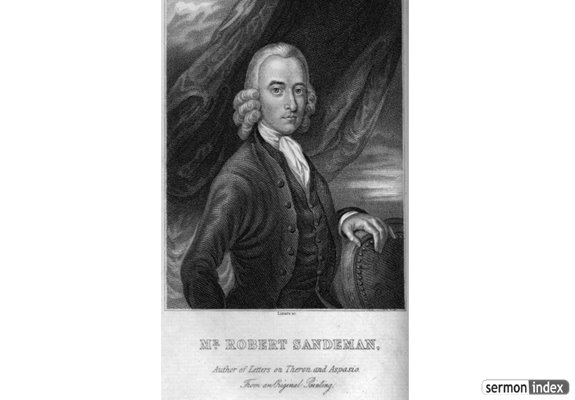
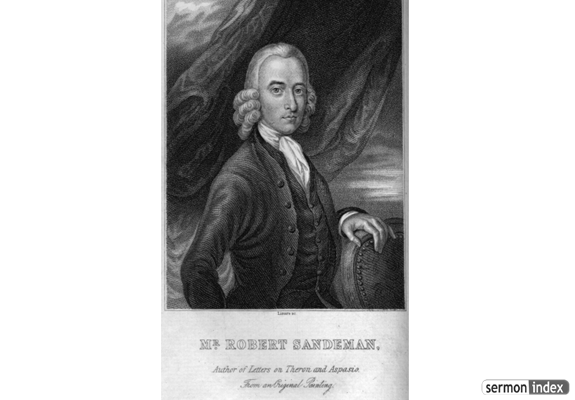
  Robert Sandeman(1718-71)- Theologian, Author, Glasite Elder, missionary and Popularizer of "Sandemanism". As an elder in the Glasite Church and husband of John Glas' daughter, Katherine, Robert popularized the Glasite faith in his magnum opus, Letters on Theron and Aspasio. Robert wrote this as a reply to the popular Puritan work, Dialogues Between Theron and Aspasio by James Hervey. In this classic work, Robert covered such topics as Christ's atoning work on the cross, how the gospel is to be presented, the natures of mystery and reason in the scripture, and finally the Biblical meaning of saving faith. Robert's understanding of saving faith was in contrast to that of the "popular preaching" of his day. Although a Calvinist himself, the Puritans' idea of faith as including the will and "holy affections", as taught in Dialogues, seemed to Robert a works-oriented salvation. For Robert, "Everyone then who is born of the spirit lives merely by what he hears without his performing any duty at all unless we shall say it was the duty of Lazarus to hear and live upon the uttering of the call come forth" (Letters, p88). Again he says on page 126, "It is a commandment not requiring anything of us but bestowing life by the knowledge which it conveys: for the belief or knowledge of Christ is happiness as Jesus says this is life eternal, to know thee the only true God, and Jesus Christ whom thou has sent. The belief or knowledge of a comfortable truth is not work or labor but rest and peace...". For Robert, salvation was by Christ's work alone and known by the gift of faith alone. Robert led churches in Edinburgh and London for many years until 1764 when he brought his teaching to America. He formed churches in Pennsylvania and neighboring states and finally came to reside in Danbury,Connecticut where he is buried in the Old Wooster Cemetery in which his head stone reads, "Here lies until the resurrection the body of Robert Sandeman, a native of Perth, North Britain; who in the face of continual opposition from all sorts of men, long and boldly contended for the ancient faith that the bare work of Jesus Christ, without a deed or thought on the part of man, is sufficient to present THE CHIEF OF SINNERS spotless before God; To declare this blessed Truth as testifyed in the Holy Scriptures, he left his Country, he left his Friends; and after much patient suffering, finished his labors at Danbury, April 2 1771 AE. 53" and on the lower part is the poem "Deigned Christ to come so nigh to us As not to count it shame, To call us Brethren, should we blush At aught that bears his name? Nay, let us boast in his reproach, And glory in his cross; When he appears, one smile from him Will far o'erpay our loss". His teaching outside of Scotland became known as Sandemanianism, (more properly Sandemanism.) Although his church in America is no longer in existence and there are only a handful of Sandemanians (Glasites) left in Scotland, variations of his influence have been represented in reformed denominations at some point in time and still are to this day.
Archibald McLean (1733-1812) -Former member of the Glasite church and a cofounder of the Scotch Baptists along with his mentor Robert Carmichael. Archibald and Robert found John Glas's interference in a disciplinary matter in their Glasgow congregation too intrusive and withdrew from his association. Having sympathizers in Edinburgh the men went there and started a new congregation with the seven former Glasites there. Archibald had been having doubts about paedobaptism anyway not finding it in the Bible and felt to truly get back to "primitive Christianity" baptism should be of believers only. He confided his convictions with Robert who agreed and went to London to be baptized by the famous Baptist pastor John Gill. Robert then returned to Edinburgh and baptized the congregation there. Robert shortly thereafter, left the Bristo Place Scottish Baptist Church for a church in Dundee, leaving Archibald as the primary elder. Archibald wrote voluminously on the doctrines of scripture causing much controversy even with his former associate John Glas over believer's baptism. Archibald, nonetheless, agreed firmly with Glas and Sandeman that faith is simply belief of the truth and that any additions denied sola fide. This later brought him into conflict with Andrew Fuller, the pastor of the baptist church at Kettering, England who is popular for his moderating calvinism. Fuller upon reading McLean's views on faith responded, eventually leading to his Strictures on Sandemanianism. McLean is considered to be the founder of the Baptist church in Scotland as Scottish Baptist churches formed over Great Britain through his books and articles he wrote for John Rippon's(Gill's successor) Annual Register 2. The Scottish Baptist Churches differed from their English and American counterparts in church government as the Scottish Baptists believed in a plurality of elders to run the affairs of the church and of course his views of faith which were considered Glasite/Sandemanian and hence the animadversions of the English Baptist pastor John Brine and the American Baptist pastor Isaac Backus to the work of Robert Sandeman would apply to McLean as well. His works also inspired the Irish born, Scottish educated Alexander Campbell who along with Barton Stone started the Restoration Movement in America. This movement ,however, taught in the Christian/Disciples of Christ/Churches of Christ churches, does not faithfully represent McLean as it degenerated into Arminianism and Baptismal Regeneration. See the 6 volume works of Archibald M'Lean for a detailed analysis of his doctrine.
Thomas
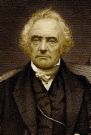 Chalmers (1780-1847)- Mathematician and Theological leader in the Free Church movement in Scotland. Thomas became disgusted with the current social conditions of his time and set about a return to the scriptural way of relief for the poor. He taught the poor should work (2 these. 3:10), relatives should care for there own (1 Tim. 5:4), and only as a last resort charity from neighbors, the rich and the church. Thomas came to see the need for a disjunction in church and state and headed up a group which led to the formation of the Free Church in Scotland. Thomas was a Calvinist in his theology and held to a Scottish Common Sense Realism. Thomas is also the formulator of the "Gap Theory" of creation which says that their is a gap of time between Genesis 1:1 and 1:2 lasting for millions or billions of years in which dinosaurs and other early lifeforms lived and Lucifer fell bringing down God's judgment and subsequent recreation starting with Genesis 1:2. This view was elaborated on by George Pember in his Earth's Earliest Ages and popularized by C.I. Scofield in his Scofield Reference Bible which has come to be called the "Divine Judgement theory".
Monday, October 02, 2006
The Scottish Legacy Part 1

Throughout the years, Scotland has been the impetus of some of the most landmark movements in history. The thinkers behind these movements have made so great an impact that to this day, whether for good or bad their legacy still survives. In this article, I will list a number of these movers and shakers and give a brief bio of their importance in history.
John Duns Scotus-(1266-1308), a Roman Catholic theologian and philosopher of
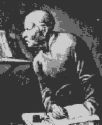 the Franciscan order famous for his views, which were often at odds with the highly revered thought of the Dominican Thomas Aquinas. John Duns is actually his name but "Scotus" was added indicating he was from Scotland. Some of the key ideas of "Scotism", the name given his philosophic thought, are first, John believed in a univocal concept of God contra Thomas Aquinas or "Thomism" which held to an analogical concept of God. This means that for Scotism truth has the same meaning for God as it does for his creatures. Thomism, however, believed truth, although related , is different for creatures due to their aquiring knowledge though the senses. Scotism held to what many believe to be a more "realistic" view of reality as opposed to Thomism which held a more conceptual view of reality. Scotism also held to a more voluntarist view, believing God makes something good by commanding it as such as opposed to the essentialist view of Thomism which held that something, the law for instance, is inherently good and therefore God is just announcing it as such. Finally, Scotism believed in "prime matter," contra his fellow Franciscan Bonaventure, which says that angels being spiritual beings, exist without form or matter. Bonaventure held that created spirit beings have some form or matter which distinguishes them from the being of God.
John Knox(1514-72), The father of the Reformation in Scotland, he came to protestant beliefs through a tu
 tor named Thomas Guillaume and then was further influenced by George Wishart who inspired his call to preach. Wishart was learned in the views of both Luther and Zwingli and taught them to Knox but when Wishart was martyred, Knox came to what he called "a perfect school of Christ" in Geneva, Switzerland where he was trained by John Calvin. Knox led Scotland in the doctrines of the reformation which are salvation is by grace alone through faith alone in Jesus Christ alone of the Bible alone to the glory of God alone. He also consistently applied these doctrines and faithfully taught the doctrines of grace which are the Total depravity of man, or that man cannot save himself from his sin, Unconditional election, or God chooses whom he saves on the basis of his grace and not human works, Limited atonement, or Christs death definitely accomplishes its purpose to save God's elect, Irresistable grace, or God's grace saves man without human aid, and the Perseverance of the saints, or God's children(elect) are given eternal life and cannot die by losing their salvation. These doctrines are called by the acronym of TULIP and are often referred to as Calvinism.
Andrew Melville(1545-1622), The founder of Presbyterianism in Scotland and around the world.Most people think John Knox founded the Presbyterian denomination but that honor is due to Andrew Melville. While it is true Melville built off of Knox and the two agreed essentially in theology, Knox was friendlier to episcopacy, or the Anglican church, than was Melville. Knox considered himself a preacher of the gospel and not an ecclesiastical organizer. Melville was opposed to all forms of "prelacy" and so laid the foundation of the presbyterian structure for the kirk(church) of Scotland. Melville also introduced the thoughts of Peter Ramus to the academia of Scotland in contrast to the Aristotelian logic commonly taught which caused no small controversy.
John Cameron(1579-1625), The founder of the school of thought known as Amyraldism often called 4 point calvinism and sometimes moderate calvinism. Cameron was a firm advocate of Ramist philosophy and therefore departmentalized knowledge instead of systematizing it and so was comfortable with apparent contradictions. Cameron agreed with the orthodoxy in his acceptance of the doctrine of predestination and his rejection of the Arminian scheme but disagreed in his belief that Christ died for the whole world, elect and reprobate, and not the elect alone. Cameron held to a "hypothetical universalism" in that hypothetically if a reprobate person were to believe he would be saved but because he does not believe this is the cause of his judgement and damnation as spoken in John 3:18. Although he was charged with novelty Cameron denied this vehemently and quoted John Calvin extensively. The english theologian and representative to the Synod of Dort in 1618, John Davenant, agreed with Cameron and, while holding firmly to predestination and despising the Arminianism of the Remonstrants, attempted to keep out the doctrine of limited atonement. This same spirit would rear its head in the Westminster meetings 30 years later in Edmund Calamy who declared "I am far from universal redemption in the Arminian sense; but that I hold is in the sense of our divines in the Synod of Dort, that Christ did pay a price for all... that Jesus Christ did not only die sufficiently for all, but God did intend, in giving Christ, and Christ in giving himself, did intend to put all men in a state of salvation in case they do believe...". Cameron also held to the unorthodox views of denying the active obedience of Christ is imputed to believers for justification, and he held to a three covenant system as opposed to the traditional covenant of nature and covenant of grace system. Cameron was successor to the illustrious Calvinist, Franciscus Gomarus at the University of Saumer in France as the professor of Divinity. Saumer was in that day one of the largest protestant schools in the world, in large part to the reputation of men like Gomarus, and so the influence of Cameron's teaching would be felt all over. Although Cameron's life was cut short by being beat to death by a crowd of people in a riot in France his cause would be taken up by one of his prized students by the name of Moise Amyraut. Later popular Amyraldists would include the presbyterian and sometime antagonist of the puritan John Owen, Richard Baxter and the baptist John Bunyan. For current Amyraldist works consult Calvin and English Calvinism to 1649 by R.T. Kendall, Atonement and Justification by Alan Clifford, The Extent of the Atonement by G. Michael Thomas and Did John Calvin Teach Limited Atonement? which is Appendix A in Curt Daniel's Hyper-Calvinism and John Gill . For critiques see The Death of Death in the Death of Christ by John Owen and The Cause of God and Truth by John Gill and more recently The Will of God and the Cross by Jonathan Rainbow.
Thomas Reid(1710-96), Founder of the school of philosophy called Scottish
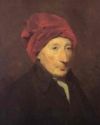 Common Sense Realism or the Scottish School. This school taught that man has a common sense which is not learned inductively or by polls but by intuition. According to Reid the principles speak for themselves. People know things cannot contradict and both be true intuitively. No one can deny everything they see, feel, hear,touch or taste as being real consistently. To live as if you are the only person in the universe or to deny these principles is to live a lie. This philosophy was brought to America by John Witherspoon, signer of the Declaration of Independence and President of the College of New Jersey now Princeton University, and was the prevailing philosophy in the glory days of old Princeton under Archibald Alexander, Charles Hodge and Benjamin Warfield displacing the philosophy of Jonathan Edwards. It's influence was felt in conservative Christian and Calvinist schools all over the country until the early part of the twentieth century when the Dutch School and its offshoot presuppositionalism starting making inroads. The Dutch School being led by such thinkers as Abraham Kuyper and Herman Bavinck and presuppositionalism by Cornelius VanTil and Gordon Clark has now eclipsed the Scottish School among Calvinists. Other leading Scottish Realists include James McCosh and Thomas Chalmers. For current treatments read Classical Apologetics by John Gerstner, R.C. Sproul and Arthur Lindsley and Where in the World is the Church by Michael Horton.
Sunday, September 24, 2006
Lamentations # 2

Cornelius Van Til was a professor at Westminster Theological Seminary for many years before his death in the mid 1980's and trained many young men in the doctrines of Grace and for that God be praised. His apologetics, however, leave much to be desired. In his book, An Introduction to Systematic Theology, he states on page 11 "Christians should therefore never appeal to the law of contradiction as something that as such determines what can or cannot be true." The Bible, however, states in 1 Corinthians 14:33 that "God is not a God of confusion but of peace." The law of noncontradiction flows from the Logos. Jesus tells us in Mark 3:24 that "if a kingdom is divided against itself, that kingdom cannot stand". In Galatians 1:8 we are told " if we or an angel from heaven, should preach to you a gospel contrary to what we have preached to you, he is to be accursed!" We better use the law of noncontradiction to determine what is being preached to us.
Lamentations # 1

Every once in a while a person who should know better makes a statement that is utterly ridiculous. But as James 3:2 states "...If any man offend not in word, the same is a perfect man..." As I come across these, I will list them as Lamentations.
In his review of the book, Classical Apologetics, by John Gerstner, R.C. Sproul, and Arthur Lindsley, Gordon Clark writes "The authors state, 'Non-Christians cannot use reason and logic to keep down the truth. They have to violate them.' Again this is a false statement. Non-Christians do not have to violate logic. Many of their arguments are perfectly valid."
Jesus says in John 14:6 "I am the way, the truth and the life..." In John 1:1, Jesus is called the Logos. Nothing can keep down the truth by logic. Any "logic" that is not true is a "science falsely so-called" 1 Timothy 6:20. Who has a "valid" reason not to believe in God? In Job chapters 38-42 God shows there are none.
Tuesday, September 19, 2006
The Gordons and the Reformation in Scotland
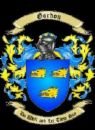
The Gordons are a clan of nobility and distinction in the annals of Scottish history. Although also owning lands in the Dumfries area of southern Scotland, the heraldry of the Gordons comes from the lands in Strathbogie in Aberdeenshire granted them by King Robert the Bruce in the highlands. According to R.R. McIan in his book The Clans of the Scottish Highlands " the Gordons of the north were at one time all powerful, and single handed, were at times opposed to government." Being the lieutenants to the north ( the Campbells were the Kings lieutenants to the south) the Gordons were given the nickname "the cock of the north". The Gordons took their charge seriously and had a penchant for battle. This led them to many conflicts with neighboring clans, especially the Macintoshes, Camerons and the Murrays. They loved conflict so much that they fought with smiles on their faces and hence earned the nickname " the gay Gordons". These facts ,however, would lead to their inevitable downfall but also ensure victory for John Knox and the Reformation in Scotland.
George Gordon the 4th Earl of Huntly was the chief of the clan in that day and was a leading Catholic stalwart. George was an unpredictable man, however, and was according to Antonia Fraser in her book Mary Queen of Scots , "totally untrustworthy in the final analysis, in all except that which intimately concerned his own clan." George ,with the power of the Gordons making him a rival to the monarchy, was quite open about his disapproval of some of the policies of Queen Mary Stuart. Although Mary and George were first cousins and George had been raised by her father James the 5th, she would brook no dissension. Mary knew, however, that it would take something serious for an assault on such a powerful and prestigious clan as the Gordons. Her wait was short lived.
John Gordon, one of George's nine sons, severely injured Lord Ogilvie while fighting on a street in Edinburgh. John sought refuge from his father and fled to Huntly. Mary insisted on George turning over of John for prosecution but was refused. This lit the fuse which would finally explode when in September 11, 1562 Alexander Gordon, another son of George, refused Mary entrance into her castle at Inverness which he kept for her while she was away due to his position as Sheriff of Inverness. After hanging Alexander, Mary wasted no time in going about doing away with her rivals to the north. This victory for Mary was a political but pyrrhic one as without the Gordons, the north was opened to the reformers. This civil war of powerful Catholics caused division and thankfully by God's grace allowed the truth to be heard in Scotland. John Knox's prayer of "give me Scotland" was graciously answered in the affirmative.
Although a Gordon, my faith in the doctrines of Grace and scripture alone contrary to Papal lies, make me thankful that the truth was made available so that my forebears and the rest of Scotland were able to hear the truth. For more information on the Gordons go to www.gordonhighlanders.com and www.houseofgordon.com also check on a search engine for Gordon's Calvary as it was a Gordon who may have discovered Golgotha and the garden tomb of Christ in Jerusalem.
Monday, September 04, 2006
Theodicy

The existence of evil in light of God's omnipotence and goodness appears to some a problem . Those who hold to Free Will think they have the answer by saying man's free will creates evil and that it is only a problem for Calvinists. Conservative theologians grant God's omnipotence and so the purpose of this discussion is to reveal from the scriptures that God determines everything that happens and that everything that happens is for his pleasure and therefore good. The answer to them is a simple reference to the scriptures in Romans 9:20 which says "who are you, O man, who answers back to God?" It is a presumption to think we can decide for God what is good.
Inconsistencies from some who hold to predestination add fuel to the free willer fire. John MacArthur, a popular Pastor, Author of the MacArthur Study Bible, and a Calvinist, says in reference to God's hardening act in Romans 9:18, that it does not refer to God's creating unbelief but that he merely withdrew his influence from Pharaoh. He later shows from his comments on verses 22 and 23 that he believes God only allows or permits sin. A short time ago, I read the minutes of an ordination service of the Orthodox Presbyterian Church, a conservative Calvinist denomination, where they ordained an elder who denied that God ordains sin. The ramifications of this thinking are devastating. The fall becomes just an accident, Christ's death a chance happening, and ultimately God is not in control.
The Bible in distinction says in Isaiah 45:7 that God causes peace and creates evil. In Proverbs 16:4 we learn that God creates the wicked for the day of evil, in Lamentations 3:38 we learn that from the mouth of the most high comes both good and evil, and Isaiah 63:17 asks "Oh Lord, why have you made us stray from your ways and harden our heart from your fear?" These verses clearly articulate that God is the ultimate cause of everything. God is glorified by demonstrating his wrath and judgment on the reprobate.
In his book, Chosen But Free, Norman Geisler argues that man's actions are caused by himself or "self-caused actions." Geisler does this under the rubric of moderate Calvinist. This line of thinking leads him to redefine all 5 points of Calvinism and therefore disqualifies him as even a moderate Calvinist. True moderate Calvinists, like W.G.T. Shedd, Curt Daniel, and John MacArthur, as listed above, although alot more careful theologians than Norman Geisler, come very close to this in their denial of God's ordaining evil.
Moderate Calvinists argue that James 1:13-18 is proof that God does not cause evil. The purpose of these verses is however to indicate that God is not the immediate cause of evil but not to contradict the verses listed above which clearly indicate he is the ultimate cause of evil. They also claim this from 1 Corinthians 14:33, but once again, this is merely God's preceptive will for speakers in the church and not indicative of God's decretive will. In 2 Chronicles 18:19-23, we learn that God used a spirit to lie in the mouth of the prophets so that Ahab would fall. In 2 Thessalonians 2:11, we learn that God will send a strong delusion that people will believe a lie. God [Rex] is ex lex. God cannot steal as everything belongs to him. God cannot murder although he kills all the time. God's jealousy is perfectly justified and righteous.
This precious doctrine should not lead to a "qué será será" way of thinking nor does it justify sin. The elect will hear God's voice, love him and follow him, keeping his commandments. However, I can rest that my sin will not frustrate God's plans as "we know that God causes all things to work together for good to those who love God to those who are called according to his purpose" Romans 8:28.
For further enlightenment on this very important matter, I highly recommend God and Evil by Gordon Clark, The Justification of God by John Piper, No Place for Sovereignty by R.K. McGregor Wright, The Serpent of Paradise by Erwin Lutzer and A New Systematic Theology of the Christian Faith by Robert L. Reymond.
Subscribe to:
Posts (Atom)