Throughout the years, Scotland has been the impetus of some of the most landmark movements in history. The thinkers behind these movements have made so great an impact that to this day, whether for good or bad their legacy still survives. In this article, I will list a number of these movers and shakers and give a brief bio of their importance in history.
John Duns Scotus-(1266-1308), a Roman Catholic theologian and philosopher of
 the Franciscan order famous for his views, which were often at odds with the highly revered thought of the Dominican Thomas Aquinas. John Duns is actually his name but "Scotus" was added indicating he was from Scotland. Some of the key ideas of "Scotism", the name given his philosophic thought, are first, John believed in a univocal concept of God contra Thomas Aquinas or "Thomism" which held to an analogical concept of God. This means that for Scotism truth has the same meaning for God as it does for his creatures. Thomism, however, believed truth, although related , is different for creatures due to their aquiring knowledge though the senses. Scotism held to what many believe to be a more "realistic" view of reality as opposed to Thomism which held a more conceptual view of reality. Scotism also held to a more voluntarist view, believing God makes something good by commanding it as such as opposed to the essentialist view of Thomism which held that something, the law for instance, is inherently good and therefore God is just announcing it as such. Finally, Scotism believed in "prime matter," contra his fellow Franciscan Bonaventure, which says that angels being spiritual beings, exist without form or matter. Bonaventure held that created spirit beings have some form or matter which distinguishes them from the being of God.
John Knox(1514-72), The father of the Reformation in Scotland, he came to protestant beliefs through a tu
 tor named Thomas Guillaume and then was further influenced by George Wishart who inspired his call to preach. Wishart was learned in the views of both Luther and Zwingli and taught them to Knox but when Wishart was martyred, Knox came to what he called "a perfect school of Christ" in Geneva, Switzerland where he was trained by John Calvin. Knox led Scotland in the doctrines of the reformation which are salvation is by grace alone through faith alone in Jesus Christ alone of the Bible alone to the glory of God alone. He also consistently applied these doctrines and faithfully taught the doctrines of grace which are the Total depravity of man, or that man cannot save himself from his sin, Unconditional election, or God chooses whom he saves on the basis of his grace and not human works, Limited atonement, or Christs death definitely accomplishes its purpose to save God's elect, Irresistable grace, or God's grace saves man without human aid, and the Perseverance of the saints, or God's children(elect) are given eternal life and cannot die by losing their salvation. These doctrines are called by the acronym of TULIP and are often referred to as Calvinism.
Andrew Melville(1545-1622), The founder of Presbyterianism in Scotland and around the world.Most people think John Knox founded the Presbyterian denomination but that honor is due to Andrew Melville. While it is true Melville built off of Knox and the two agreed essentially in theology, Knox was friendlier to episcopacy, or the Anglican church, than was Melville. Knox considered himself a preacher of the gospel and not an ecclesiastical organizer. Melville was opposed to all forms of "prelacy" and so laid the foundation of the presbyterian structure for the kirk(church) of Scotland. Melville also introduced the thoughts of Peter Ramus to the academia of Scotland in contrast to the Aristotelian logic commonly taught which caused no small controversy.
John Cameron(1579-1625), The founder of the school of thought known as Amyraldism often called 4 point calvinism and sometimes moderate calvinism. Cameron was a firm advocate of Ramist philosophy and therefore departmentalized knowledge instead of systematizing it and so was comfortable with apparent contradictions. Cameron agreed with the orthodoxy in his acceptance of the doctrine of predestination and his rejection of the Arminian scheme but disagreed in his belief that Christ died for the whole world, elect and reprobate, and not the elect alone. Cameron held to a "hypothetical universalism" in that hypothetically if a reprobate person were to believe he would be saved but because he does not believe this is the cause of his judgement and damnation as spoken in John 3:18. Although he was charged with novelty Cameron denied this vehemently and quoted John Calvin extensively. The english theologian and representative to the Synod of Dort in 1618, John Davenant, agreed with Cameron and, while holding firmly to predestination and despising the Arminianism of the Remonstrants, attempted to keep out the doctrine of limited atonement. This same spirit would rear its head in the Westminster meetings 30 years later in Edmund Calamy who declared "I am far from universal redemption in the Arminian sense; but that I hold is in the sense of our divines in the Synod of Dort, that Christ did pay a price for all... that Jesus Christ did not only die sufficiently for all, but God did intend, in giving Christ, and Christ in giving himself, did intend to put all men in a state of salvation in case they do believe...". Cameron also held to the unorthodox views of denying the active obedience of Christ is imputed to believers for justification, and he held to a three covenant system as opposed to the traditional covenant of nature and covenant of grace system. Cameron was successor to the illustrious Calvinist, Franciscus Gomarus at the University of Saumer in France as the professor of Divinity. Saumer was in that day one of the largest protestant schools in the world, in large part to the reputation of men like Gomarus, and so the influence of Cameron's teaching would be felt all over. Although Cameron's life was cut short by being beat to death by a crowd of people in a riot in France his cause would be taken up by one of his prized students by the name of Moise Amyraut. Later popular Amyraldists would include the presbyterian and sometime antagonist of the puritan John Owen, Richard Baxter and the baptist John Bunyan. For current Amyraldist works consult Calvin and English Calvinism to 1649 by R.T. Kendall, Atonement and Justification by Alan Clifford, The Extent of the Atonement by G. Michael Thomas and Did John Calvin Teach Limited Atonement? which is Appendix A in Curt Daniel's Hyper-Calvinism and John Gill . For critiques see The Death of Death in the Death of Christ by John Owen and The Cause of God and Truth by John Gill and more recently The Will of God and the Cross by Jonathan Rainbow.
Thomas Reid(1710-96), Founder of the school of philosophy called Scottish
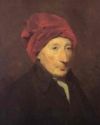 Common Sense Realism or the Scottish School. This school taught that man has a common sense which is not learned inductively or by polls but by intuition. According to Reid the principles speak for themselves. People know things cannot contradict and both be true intuitively. No one can deny everything they see, feel, hear,touch or taste as being real consistently. To live as if you are the only person in the universe or to deny these principles is to live a lie. This philosophy was brought to America by John Witherspoon, signer of the Declaration of Independence and President of the College of New Jersey now Princeton University, and was the prevailing philosophy in the glory days of old Princeton under Archibald Alexander, Charles Hodge and Benjamin Warfield displacing the philosophy of Jonathan Edwards. It's influence was felt in conservative Christian and Calvinist schools all over the country until the early part of the twentieth century when the Dutch School and its offshoot presuppositionalism starting making inroads. The Dutch School being led by such thinkers as Abraham Kuyper and Herman Bavinck and presuppositionalism by Cornelius VanTil and Gordon Clark has now eclipsed the Scottish School among Calvinists. Other leading Scottish Realists include James McCosh and Thomas Chalmers. For current treatments read Classical Apologetics by John Gerstner, R.C. Sproul and Arthur Lindsley and Where in the World is the Church by Michael Horton.